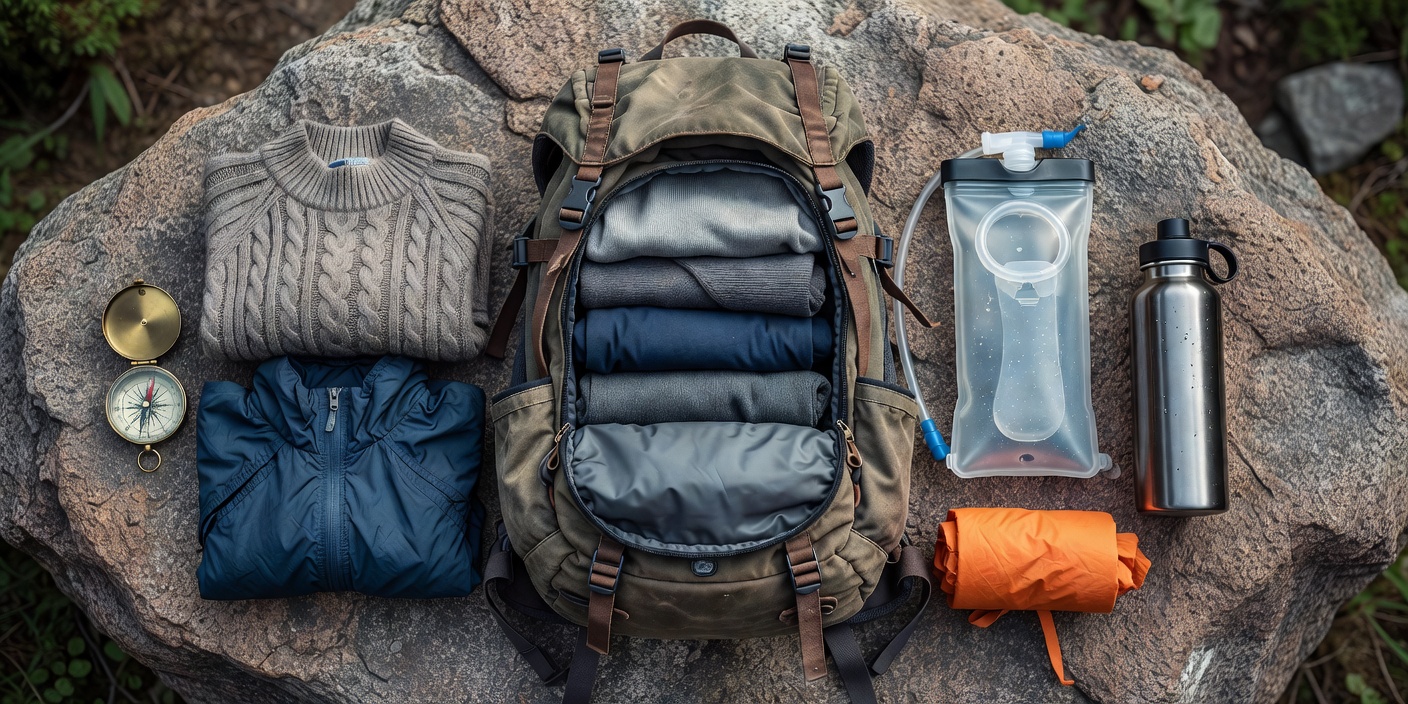
The concept of the "Ten Essentials" originated in the 1930s with The Mountaineers, a Seattle-based organization. Since then, the list has evolved from a strict catalog of specific items into a systems-based approach. When packing for a day hike, the focus is not merely on bringing ten specific objects, but ensuring you have ten functional systems capable of mitigating environmental risks.
1. Navigation System
Modern trail navigation relies heavily on digital mapping applications via smartphones. However, electronics fail: batteries drain faster in cold weather, and GPS devices can lose signal in deep canyons. A complete navigation system includes a topographic map of the specific area, an orienteering compass, and the knowledge of how to use them together. Altimeters and dedicated GPS receivers act as excellent secondary devices, but the map and compass remain the primary baseline.
2. Sun Protection
Prolonged UV exposure at altitude accelerates dehydration and causes severe burns. The atmosphere provides less UV filtration the higher you climb. Sun protection requires a multi-faceted approach: chemical sunscreens (SPF 30 or higher) for exposed skin, UV-rated sunglasses with wrap-around coverage to prevent snow blindness, and UPF-rated clothing, including wide-brimmed hats and lightweight long-sleeve shirts.
3. Insulation (Extra Clothing)
Mountain weather is notoriously volatile. A sunny trailhead at 70°F (21°C) can give way to near-freezing sleet at the summit. Insulation must be managed through layering. Avoid cotton, which retains moisture and leaches body heat. Instead, rely on merino wool or synthetic base layers, an insulating mid-layer (such as a fleece or down jacket), and a waterproof/breathable outer shell to block wind and precipitation.
4. Illumination
Many emergency search-and-rescue operations stem from hikers underestimating how long a trail will take and getting caught out after sunset. A reliable headlamp should be in your pack on every hike, regardless of whether you plan to be back before dark. Ensure the headlamp has a fresh set of batteries, or carry a backup set. Flashlights are secondary; a headlamp keeps your hands free for scrambling or checking maps.
"The wilderness does not care about your itinerary. Preparedness is the only buffer between an inconvenience and a survival situation."
5. First-Aid Supplies
Pre-packaged first-aid kits are a starting point, but they should be customized to the environment and the duration of the trip. Essential contents include blister treatments (moleskin or hydrocolloid bandages), adhesive bandages of various sizes, gauze pads, medical tape, antiseptic wipes, ibuprofen, antihistamines, and fine-tipped tweezers for tick or splinter removal.
6. Fire Starters
The ability to reliably start a fire is critical for signaling and staving off hypothermia if forced to spend an unexpected night outdoors. Matches should be waterproof or kept in a waterproof container. A reliable butane lighter is highly effective. Additionally, carry chemical fire starters or tinder—such as cotton balls soaked in petroleum jelly—which ignite quickly even in damp conditions.
7. Repair Kits and Tools
Equipment failure in the backcountry requires immediate field repair. A basic multi-tool with a knife blade, pliers, and scissors is indispensable. Wrap a few feet of duct tape or tenacious tape around a water bottle for repairing torn tent fabric or mending a broken backpack strap. A small sewing kit and a length of paracord provide vast utility for minimal weight penalty.
8. Nutrition (Extra Food)
Caloric burn during elevation gain is substantial. Pack the food you anticipate needing for the duration of your hike, plus an additional day's worth of non-perishable emergency rations. Energy bars, jerky, nuts, and trail mix offer high caloric density relative to their weight. Complex carbohydrates and proteins provide sustained energy.
9. Hydration (Extra Water)
Water requirements fluctuate based on temperature, exertion, and individual physiology, but a baseline of 0.5 liters per hour of moderate activity is standard. Carrying enough water for a full day is heavy. Therefore, a complete hydration system includes both the vessels (reservoirs or hard-sided bottles) and a method for treating wild water, such as a hollow-fiber membrane filter, chemical purification tablets (chlorine dioxide), or a UV purifier.
10. Emergency Shelter
If an injury immobilizes you, maintaining core body temperature becomes the immediate priority. An emergency shelter protects against wind and rain. For day hikers, an ultralight emergency space blanket or a reflective bivy sack is sufficient. They weigh mere ounces and pack down to the size of an apple, yet reflect up to 90% of radiated body heat back to the user.
By treating the Ten Essentials as interconnected systems rather than a checklist, hikers can scale their preparation to match the severity of their environment. Whether attempting a localized loop or a high-alpine traverse, adherence to these principles significantly reduces the margins of risk.