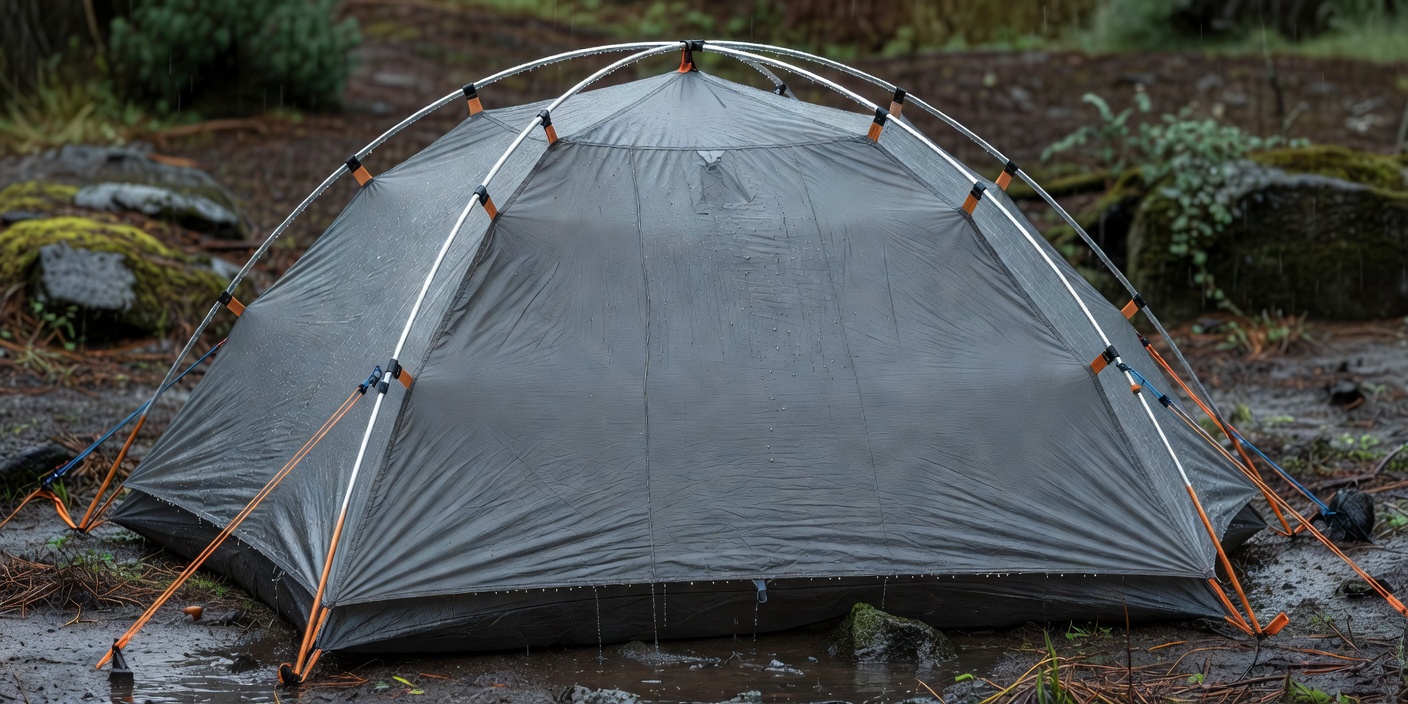
A backcountry shelter is not merely a place to sleep; it is a highly engineered structural barrier against atmospheric hostility. Evaluating shelter architecture requires analyzing the trade-offs between weight, durability, interior volume, and condensation management. The market presents three primary categories: traditional double-wall tents, single-wall ultralight tents, and minimalist tarp systems.
Double-Wall vs. Single-Wall Construction
The standard modern tent utilizes a double-wall construction: an inner body made primarily of breathable mesh, draped by a waterproof outer rainfly. This design creates an air gap between the layers. As warm, moisture-laden air exhaled by the occupant rises, it passes through the mesh and condenses on the cold underside of the rainfly, keeping the interior living space dry. This design offers superior condensation management and adaptability (the fly can be removed on clear nights), but inherently requires more fabric and heavier pole structures.
Single-wall tents merge the mesh and the waterproof canopy into a single layer of fabric, often relying on trekking poles for structural support to save weight. The primary advantage is a drastic reduction in pack weight. However, single-wall shelters require sophisticated ventilation strategies to prevent condensation from dripping directly onto the occupant. They demand careful site selection—pitching under trees to reduce radiant heat loss and aligning vents with prevailing breezes.
| Shelter Type | Weight Range | Condensation Management | Setup Complexity |
|---|---|---|---|
| Double-Wall Freestanding | 3.5 lbs - 6 lbs | Excellent (Air gap separates moisture) | Low (Intuitive pole hubs) |
| Single-Wall Trekking Pole | 1.5 lbs - 2.5 lbs | Poor to Moderate (Requires venting) | High (Tension-dependent) |
| Flat Tarp | 8 oz - 16 oz | Maximum (Open airflow) | Very High (Knot knowledge required) |
Fabric Technologies and Hydrostatic Head
Tent durability and weather resistance are dictated by the fabric type and its coatings. Most modern tents utilize nylon or polyester treated with Polyurethane (PU), Silicone, or Polyether Urethane (PEU). High-end ultralight shelters employ Dyneema Composite Fabric (DCF), which is intrinsically waterproof and incredibly strong, though prohibitively expensive and less abrasion-resistant over rocky terrain.
When analyzing waterproofness, manufacturers cite a "Hydrostatic Head" (HH) rating, measured in millimeters. A rating of 1,200mm indicates the fabric can withstand a 1,200mm column of water before leaking. For three-season rain protection, a 1,500mm to 3,000mm rating on the rainfly is standard, while tent floors—subjected to body weight pressing against wet ground—often require 3,000mm to 10,000mm ratings.
The Critical Role of R-Values
A pristine, weather-tight shelter is useless if conductive heat loss drains the occupant's core temperature into the frozen earth. Sleeping pads provide this critical thermal isolation, measured via the R-value scale.
The R-value measures thermal resistance; higher numbers mean greater insulation. Ground conduction can strip body heat faster than ambient air convection. Without a proper pad, even a sleeping bag rated for sub-zero temperatures will compress beneath the sleeper, rendering its bottom insulation void.
Industry standards (ASTM F3340-18) classify pads into consistent ratings. For summer use, an R-value of 1.0 to 2.0 is adequate. For spring and fall shoulder seasons, aim for 2.0 to 4.0. For sleeping on snow or frozen ground, an R-value of 5.0 or greater is strictly required, often achieved by stacking a closed-cell foam pad beneath an insulated inflatable pad.
"Your tent stops the wind and the rain. Your sleeping pad stops the mountain from stealing your heat."
Down vs. Synthetic Insulation
The final component of the shelter ecosystem is the sleeping bag or quilt. Goose and duck down offer an unmatched warmth-to-weight ratio and exceptional compressibility. However, if down becomes saturated with water, its loft collapses, and its insulating properties plummet to zero. Synthetic insulation, while heavier and bulkier, retains its structural loft and continues to trap heat even when wet.
Selecting the optimal shelter and sleep system requires an honest appraisal of the environmental conditions you intend to face. Ultralight gear excels in arid, high-mileage pursuits, but rugged double-wall architectures provide necessary resilience in sustained, multi-day storm cycles.